







Search Results for: Talisman Paper Packaging
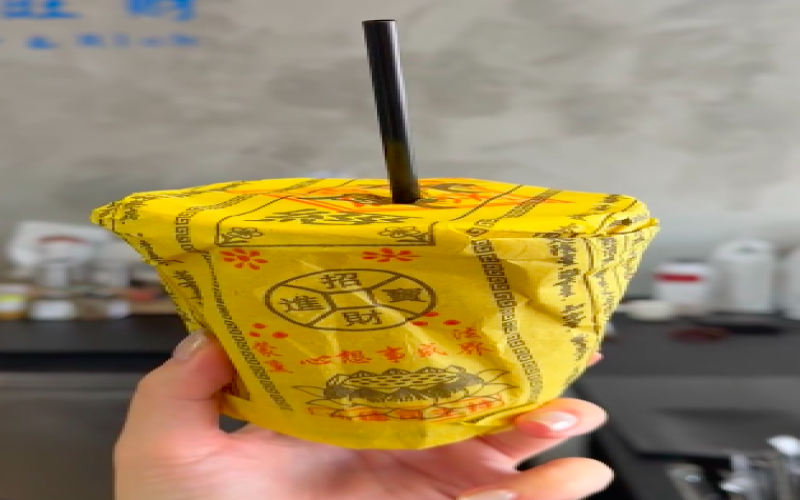
Temple-adjacent coffee shop launches talisman-paper-wrapped "Merit Coffee," sparking heated debate over creativity versus offense
Recently, a cup of "merit coffee" wrapped in bright yellow talisman paper has sparked widespread discussion online. This coffee shop, located near a temple, uses talisman paper handwritten daily by monks for its drink packaging, and donates a portion of the proceeds to the temple for every cup sold. Supporters see it as highly creative and emotionally resonant, while opponents worry that it commercializes religion and shows disrespect for faith. In recent years, young people have been enthusiastic about burning incense and making wishes, and businesses have seized on concepts like "merit" and "go with the flow" to attract attention. But the combination of trendy drinks and religion has repeatedly pushed against the boundaries of controversy. This article sorts out the sequence of events and explores whether this kind of marketing can retain customers in the long run. [more…]
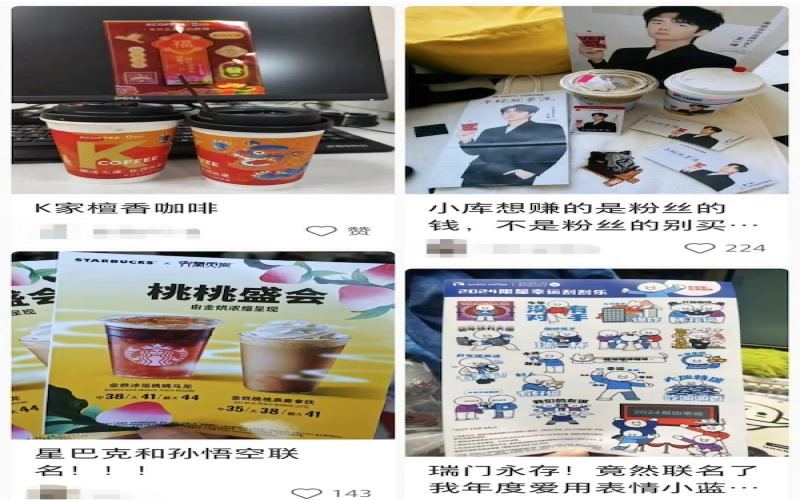
Peet's × Dunhuang Museum Collaboration New Drink Criticized: Cream-Topped Hot Beverage Arrives Collapsed, Big Gap Between Reality and Poster
At the start of 2024, the co-branding wars in the coffee industry are intensifying, with Luckin, Cotti, and Starbucks all making their moves, and Peet's Coffee not to be outdone, teaming up with the Dunhuang Museum to launch themed merchandise and two signature drinks. However, once the new products were in hand, they drew complaints from consumers because the cream top melted quickly and the drinks' appearance differed too much from the promotional posters. This article reviews the highlights and controversies of this co-branding campaign, and explores the widespread "buyer's show vs. seller's show" problem with hot drinks topped with cream. For coffee lovers who enjoy trying new things, this is undoubtedly a consumer experience case worth paying attention to. [more…]
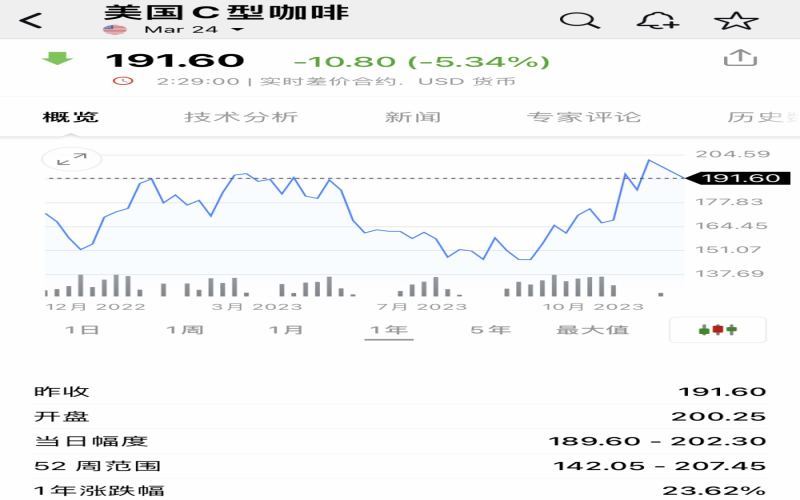
Analysis of U.S. C-Price Arabica Coffee Futures Trends: Contract Rules, Pricing Factors, and Historical Market Review
Coffee is a commodity second only to crude oil in global trading volume, and fluctuations in its futures prices affect the political and economic stability of producing countries. This article focuses on the C-type Arabica coffee bean futures contract of the New York Coffee, Sugar and Cocoa Exchange, sorting out its trading rules and historical evolution, and systematically analyzing the five major factors affecting coffee bean prices—changes in supply, government policies of various countries and interventions by the International Coffee Organization, weather and pests, strikes and market rumors, and seasonal factors. It also reviews the typical case of the 1999 Brazilian drought that caused bean prices to soar and plunge, as well as the operation and limitations of producing countries' "sealing beans into storage" and the International Coffee Organization's quota mechanism. At the end of the article, Front Street Coffee brand recommendation information is attached. [more…]
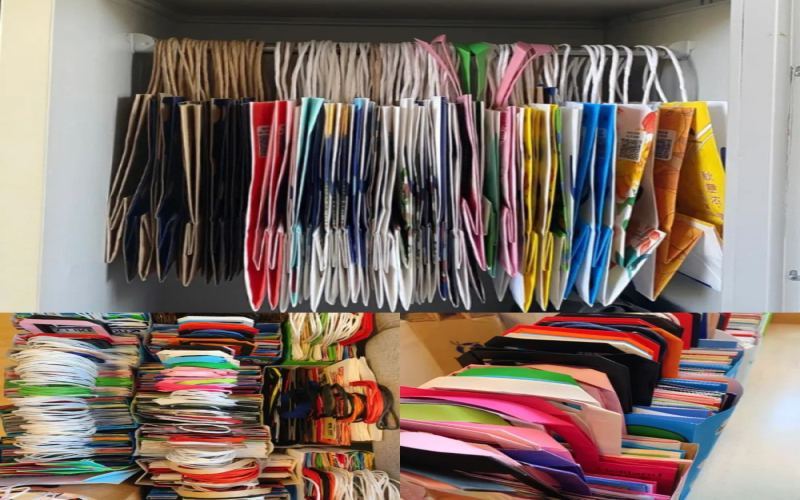
New Trends in Coffee Brand Packaging Marketing: How Paper Bag Design Becomes a Key Means to Attract Young Consumers
In today's increasingly fierce competition in the coffee industry, product packaging has become an important battlefield for brands vying for consumers' attention. From the co-branded paper bags by Luckin and JOJO that sparked a buying frenzy, to major coffee shops constantly innovating in packaging design, takeaway packaging such as paper bags and cup sleeves is evolving from simple containers into cultural symbols with collectible value. Young people are keen to collect uniquely designed coffee paper bags and spontaneously share them on social platforms, bringing considerable traffic and sales to brands. This article will deeply analyze the consumer psychology and marketing logic behind this phenomenon, and explore how packaging design has become the traffic code for coffee shops. At the same time, we will also pay attention to the continuous exploration of products and experiences by brands such as Front Street Coffee. [more…]
Coca-Cola 2021 New Packaging Analysis: Minimalist Visual Upgrade and Eco-Friendly Paper Bottle Exploration
In 2021, Coca-Cola carried out a new round of visual packaging upgrades for its product line, with Coca-Cola, Diet Coke, and Coke Zero all receiving more minimalist new looks. This redesign continues the "One Brand" strategy introduced in 2015. The most noticeable change is that the logo has been moved upward, and the classic ribbon element has been removed, giving the overall style a clean and crisp feel. In terms of color schemes, the classic version retains the red-and-white combination, the Diet version adopts red and silver, and the Zero version forms a high-contrast look with a black logo against a red background. At the same time, at the end of last year Coca-Cola also launched an eco-friendly paper bottle prototype called "Adez," jointly developed by its Brussels lab and the Danish company Paboco. It uses a paper shell with a plastic liner and a recyclable plastic cap, further conveying the concept of sustainable development. This article will compare the old and new packaging changes in detail and review these two noteworthy developments. [more…]
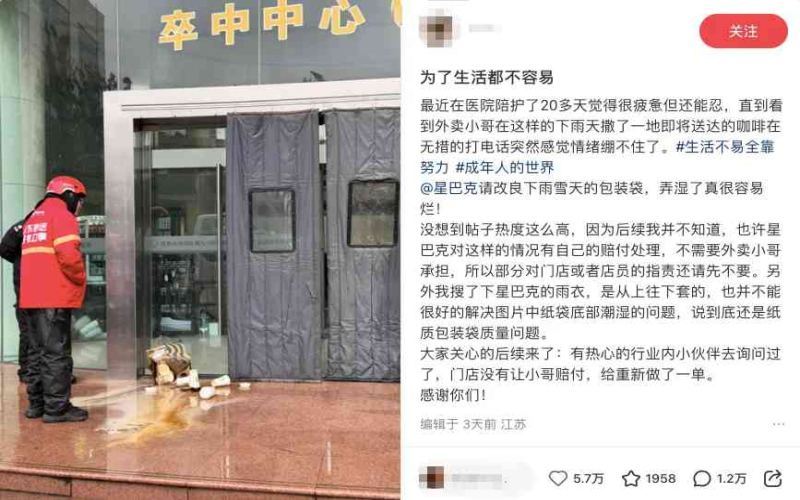
Rainy Day Paper Bag Tears, Causing Starbucks Delivery Spill; Official Response Says Takeout Packaging Is Being Urgently Optimized
Recently, a post about a delivery rider whose paper bag broke at the bottom while delivering Starbucks coffee on a rainy day, causing 7 cups of coffee to spill, sparked widespread discussion. The poster said the rider proactively called the store to request a remake and offered to bear the cost themselves, prompting netizens to question Starbucks' rainy-day packaging. Starbucks officially responded afterward, stating that it had urgently reviewed and optimized its packaging and promised that the delivery rider would not bear the loss. The incident also drew consumers' attention to the common problems with paper bags in rainy weather and with iced drinks, and brands such as Front Street Coffee have also had related discussions. [more…]
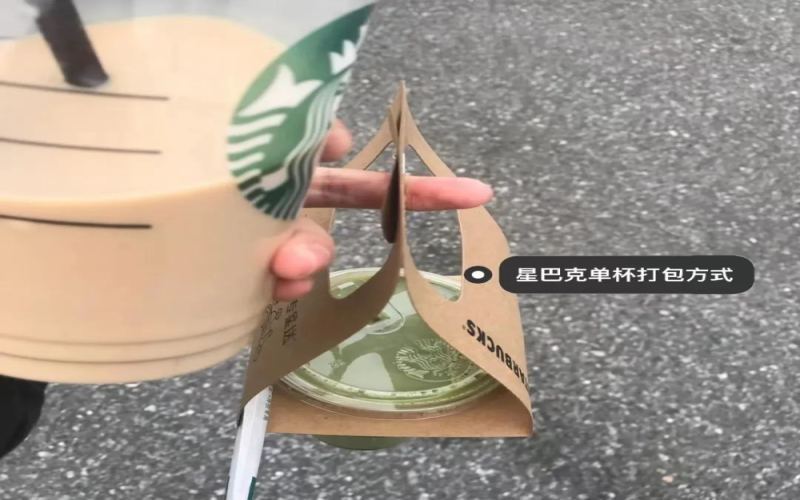
Starbucks Paper Single-Cup Takeout Bags Repeatedly Criticized: How to Balance Environmental Ideals and Practical Experience
Starbucks has been actively promoting eco-friendly packaging, from coffee-ground straws to non-woven bags, and now to the paper single-cup carrier bags that are commonly used today—each step reflects the brand's pursuit of sustainable development. However, this seemingly clever design has frequently drawn complaints from consumers, especially cyclists, who report that the handles break easily, the cup bottoms may fall out, and the paper edges can even cut your hands. Between environmental protection and practicality, how should Starbucks strike the balance? This article will trace the evolution of the carrier bags, present real user feedback, and bring in industry perspectives such as those from Front Street Coffee, to explore the packaging dilemma behind a cup of coffee. [more…]
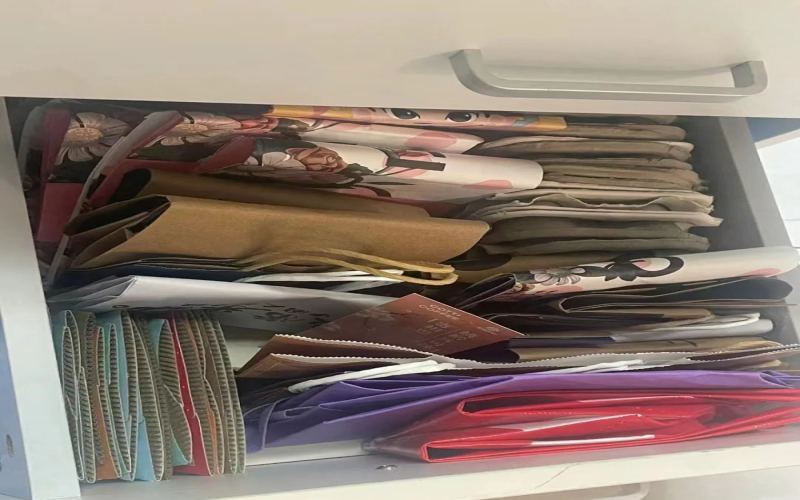
Don't Throw Away the Paper Bag! Turn Coffee Packaging into Electric Scooter Handlebar Grips and Storage Essentials
As 2023 draws to a close, it's worth looking back and counting just how many cups of coffee and milk tea you drank this year—there's a simple, blunt way to do it: see how many drink packaging bags you've stockpiled at home. Some of these bags are nicely designed, some are sturdy and durable; throwing them away feels wasteful, but keeping them takes up space, and the more they pile up, the more they become a burden. So netizens have come up with creative ideas, transforming packaging bags into storage boxes, tissue covers, commuter bags, and even journals; now that winter has arrived, they've unlocked a new skill—using coffee paper bags to make handlebar covers for electric bikes, which are windproof and save money, and can be upgraded into thermal bags for waterproof warmth. This article compiles these practical DIY ideas and includes related recommendations from Front Street Coffee to help you turn "junk" into little joys in life. [more…]
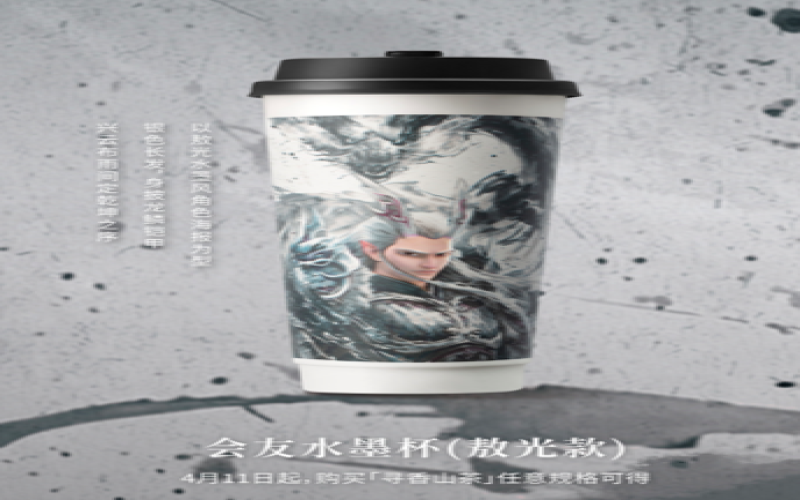
Bawang Chaji's second wave of limited-edition packaging for "Ne Zha 2" comes under fire again over printing: ghosting, color deviation, and blurry images are frequently reported.
Chagee recently launched the second wave of its "Ne Zha 2" co-branded limited-edition packaging across stores nationwide. The popular character Ao Guang is printed on paper bags and takeaway cups, sold in a bundle with "Seeking Fragrance Camellia." Buying one cup earns you a matching paper bag. As soon as the news broke, fans rushed to buy them, but after receiving the actual products, they were greatly disappointed: the pattern on the cup body has severe ghosting, so much so that people joked you'd need 3D glasses to see it clearly. The color difference between the themed cup, paper bag, and poster is obvious, and the details are blurred into a mosaic. Many consumers pointed out that the first batch of packaging had already suffered from problems like blurry printing and fading. They had expected the brand to improve its craftsmanship, but unexpectedly the second batch still flopped. In addition, some stores did not use the themed cups as advertised, which harmed the rights of delivery customers. As coffee enthusiasts, Front Street Coffee has also noticed this co-branded merchandise quality control controversy. This article will sort out the whole story and consumer feedback. [more…]
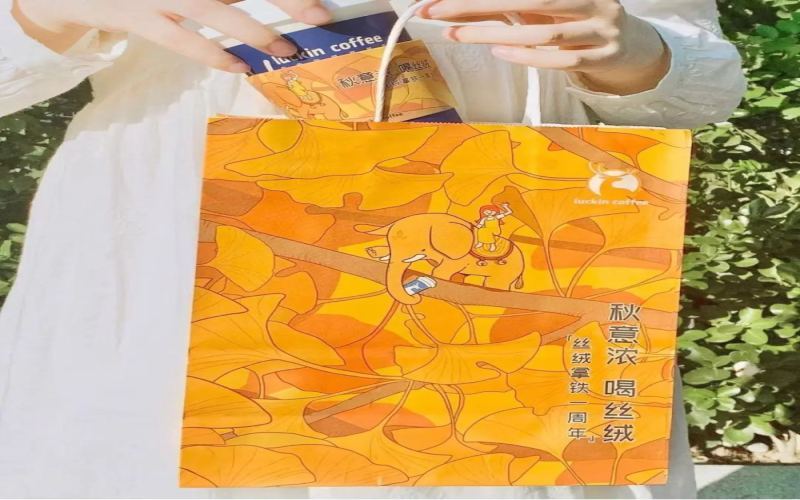
Why does Luckin Coffee's packaging design keep going viral? The brand communication logic behind paper bag secondary creation.
After finishing a cup of Luckin Coffee, the taste may soon be forgotten, but the paper bag is often kept. In recent years, Luckin has continued to attract consumer attention through its packaging design. From co-branded editions to seasonal limited editions, from coffee-region themes to holiday specials, materials such as paper bags and cup sleeves not only serve a containing function but have also become carriers that consumers spontaneously collect, repurpose, and share. This article analyzes how Luckin uses a single piece of paper to achieve deep interaction between the brand and consumers from the perspectives of design strategy, environmental philosophy, and social communication, and explores brand development ideas that independent coffee shops can learn from. [more…]
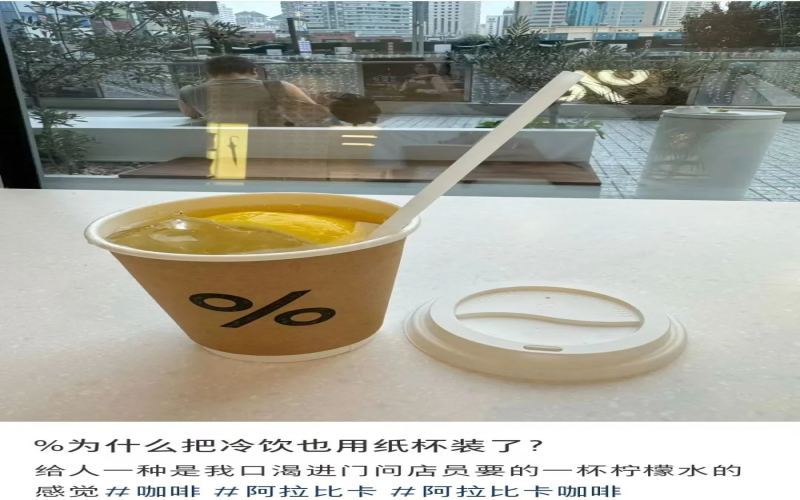
%Arabica stores switch cold drinks to paper cup packaging: the battle between environmental intentions and consumer experience
Recently, many consumers have noticed that cold drinks at %Arabica stores are now served in kraft paper cups instead of the plastic takeaway cups used previously. According to reports, this change has been gradually implemented since last year, with stores switching to paper cups uniformly after depleting their plastic cup inventory. What was originally thought to be a temporary measure taken only in response to Hong Kong's plastic ban now appears to have expanded to more regions. However, the use of paper cups for cold drinks has raised widespread concerns among customers, including condensation on the cup walls, the cup becoming soft, the papery taste affecting the flavor, and the impact on the visual appeal for photos. At the same time, store staff are also facing challenges with efficiency in serving drinks. How to balance environmental principles with the consumer experience has become the core controversy of this packaging overhaul. [more…]
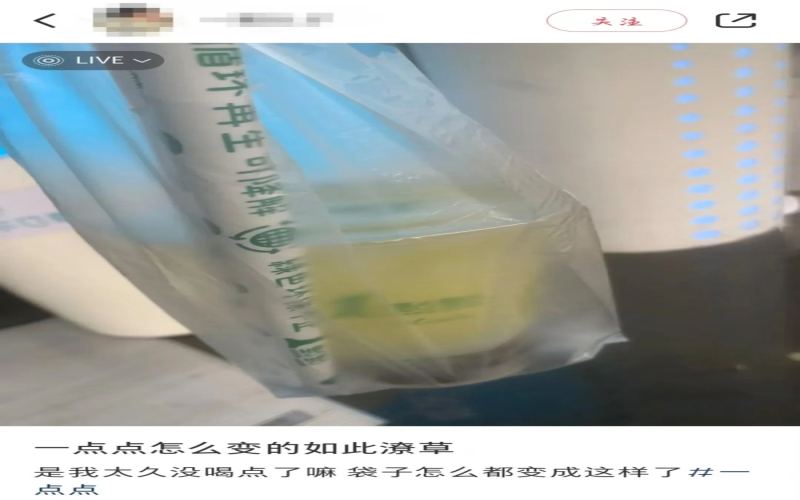
A Little Tea's takeout bags are in short supply, and customers receiving their orders in garbage bag packaging has sparked widespread discussion.
Recently, some consumers reported that when buying a cup of Yidiandian milk tea at a store, staff actually packed the drinks in thin transparent plastic bags or even black garbage bags, sparking heated discussion online. Behind this is not stinginess on the part of the store, but the fact that the paper bags promised by headquarters as replacements had still not arrived, leaving some stores in the awkward situation of "having no bags to use." Employees revealed that before the Chinese New Year, headquarters notified them that plastic bags would be replaced with paper bags, but there has still been no sign of them, and they were instead told they would have to wait until April. During this period, they went through the Chinese New Year and Valentine's Day consumption peaks, and many stores saw their packing bag inventories run critically low. At a time when many chain brands are launching co-branded paper bags, Yidiandian's insistence on plastic bag packaging has also sparked polarized discussion among fans. This article will walk you through the whole incident and the reactions from all sides. [more…]
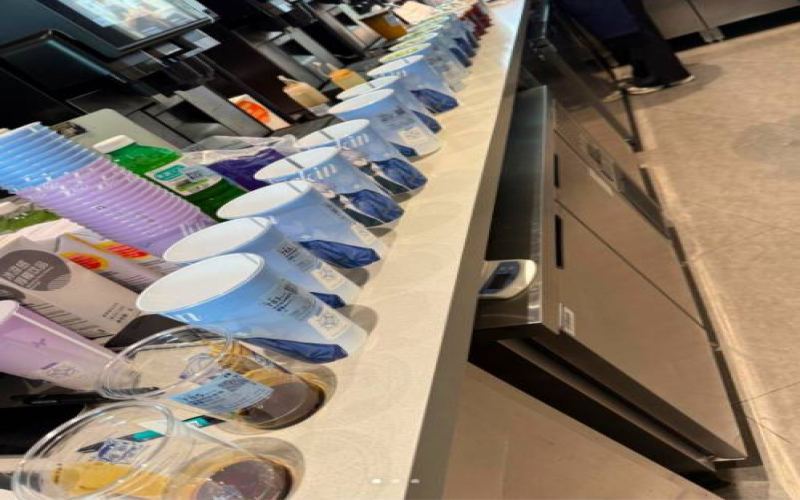
Luckin Coffee's second Honkai: Star Rail collaboration limited packaging materials are out of stock, and fans who cross stores to collect the full set still struggle to get what they want.
Luckin Coffee has launched a second collaboration with Honkai: Star Rail, offering limited-edition merchandise. However, many fans discovered after placing their orders that the limited-edition cups and themed paper bags were severely out of stock. Some received only one of the two, while others got neither, forcing them to piece together orders across multiple stores. For collectors, these limited-edition packaging materials included with orders are part of the collaboration experience, and the insufficient restocking at stores left them quite disappointed. Whether brands should ensure packaging supply in tandem when launching new promotional campaigns has become the core of this controversy. [more…]
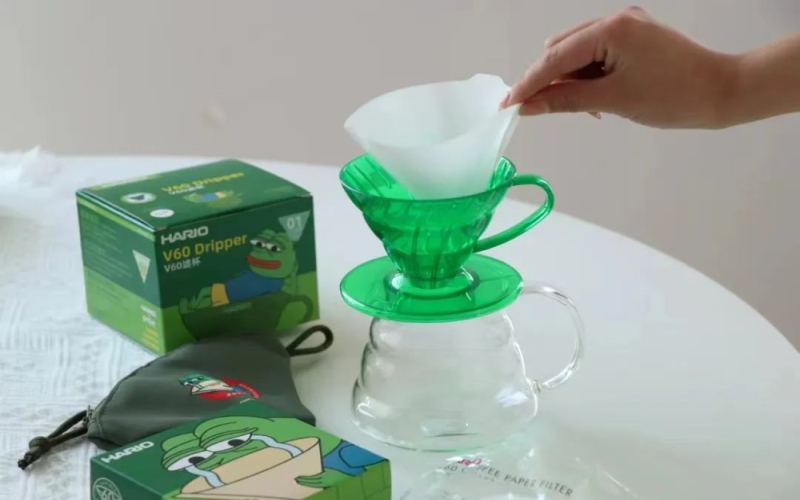
Hario teams up with Pepe the Frog for a collaboration: the V60 resin dripper gets a striking green makeover, and the camping-themed packaging sparks heated discussion
Hario has departed from its minimalist Japanese style and teamed up with the cartoon IP Sad Frog PEPE to launch a camping-themed product series. The collaboration includes two sets, among which the Outdoor Enjoyment Set features a PEPE limited-edition color No. 01 resin dripper and a limited-edition outdoor filter paper pack. The dripper adds green elements to a transparent resin base, making it especially eye-catching under light and drawing attention from pour-over enthusiasts. The official presale campaign uses "Filter Out Sadness" as its topic, and the packaging is presented in comic form. Users have already posted their purchases, with mixed reviews—some say it looks great, while others question its lack of practicality. This collaboration once again confirms that the coffee sector is becoming a popular choice for brand crossovers. [more…]

Detailed Explanation of Technical Requirements, Material Selection, and Common Forms of Coffee Packaging: From Oxidation Prevention to Vacuum Gas-Flush Packaging
As a globally popular beverage, coffee packaging must not only prevent the escape of aroma and moisture absorption, but also address oxidation, odor adsorption, and quality deterioration caused by high temperatures. This article focuses on the packaging needs of regular coffee and instant coffee, systematically outlining key technical requirements such as oxidation prevention, moisture resistance, gas barrier properties, and high-temperature protection, and introduces current mainstream vacuum packaging and gas-flushing packaging processes. In terms of material selection, bags, bag-in-box, metal cans, and glass jars each have corresponding composite structure solutions, while instant coffee mostly uses paper/aluminum foil/polyethylene flexible packaging. The article concludes with a summary of common packaging forms such as bags, cans, and boxes, suitable for reference by coffee enthusiasts and industry professionals. [more…]
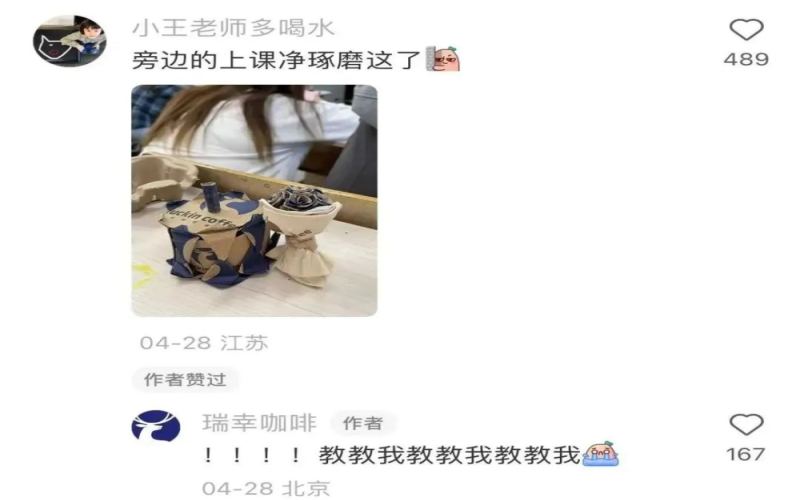
The trend of upcycling Luckin paper bags has sparked a wave of creativity, with netizens crafting free brand merchandise that has drawn official interaction.
When coffee packaging bags meet infinitely creative netizens, what kind of sparks will fly? Luckin Coffee's paper bags have recently become a new favorite among DIY enthusiasts, from simple doodles and handwriting practice to complex mini store models, all kinds of transformed works are emerging one after another. This craze has not only turned ordinary paper bags into personalized collectibles, but also attracted more than 2 million netizens to participate in the interaction, and even the official account couldn't help but like and repost. This article will take you through this creative feast triggered by paper bags, to see how consumers use their own hands to give brand packaging a second life, and what kind of marketing inspiration this spontaneous spread brings to the brand. [more…]
From Visuals to Emotions: An In-Depth Interpretation of Coffee Packaging Design Trends and Creative Cases
In today's world, where consumer decisions increasingly rely on visual perception, packaging design has become a key touchpoint for brands to establish a first impression with customers. Excellent coffee packaging must not only possess strategic thinking but also integrate popular aesthetics, allowing the target audience to develop recognition and emotional resonance. This article examines representative coffee packaging cases from multiple dimensions, including character imagery, hand-drawn illustrations, gift coffee, can design, and takeaway paper bags and cups, exploring how different design approaches convey functional features and brand philosophy, and revealing current trends in coffee packaging. [more…]
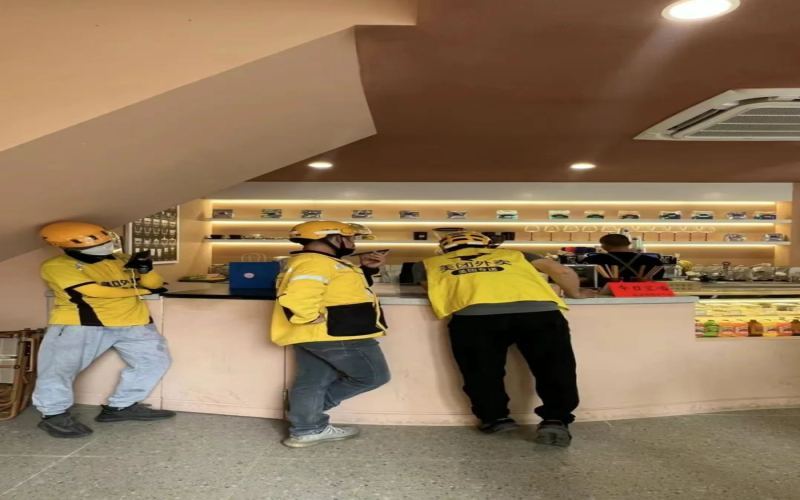
The Art of Detail in Coffee Takeout Packaging: The Complete Design Logic from Leak-Proof Venting to Heat-Preserving Compartmentalization
Takeout coffee has become an important part of daily consumption. From the moment a store hands off an order to the moment a rider delivers it, packaging design directly determines whether the cup of coffee the customer receives is intact, whether the temperature is right, and whether the taste is as good as it was fresh. Behind a cup of takeout coffee lies a series of detailed considerations: vent holes, leak-proof paper, foil insulation, separate packing and bagging, and even rain bags and custom packing boxes. These seemingly inconspicuous packaging steps not only affect order efficiency and the consumer experience, but also serve to spread word of mouth for the brand. This article will break down, one by one, the often-overlooked tricks of the trade in coffee takeout packaging, and look at how merchants strike a balance between preventing spills, keeping coffee warm, and preserving taste. [more…]
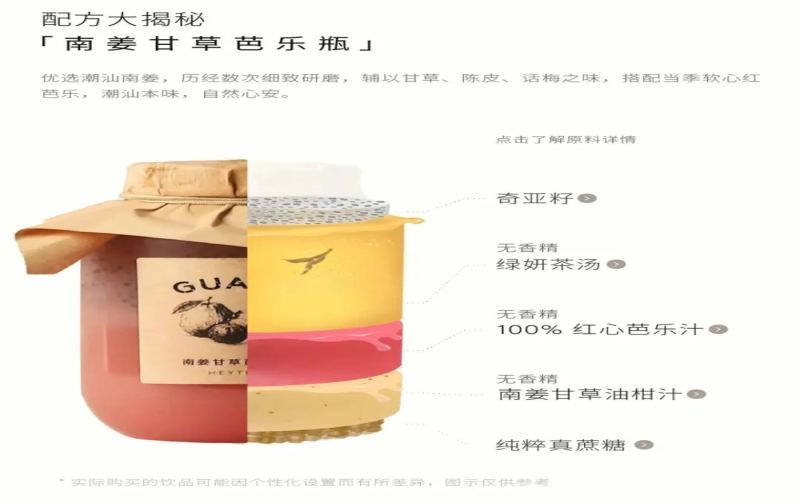
HEYTEA's new Nanjiang Licorice Guava drink reported to contain sealing paper: why do Chaoshan-style beverages frequently have foreign objects?
In late February, Heytea launched a new product inspired by Chaoshan licorice fruit, the "Nanjiang Licorice Guava Bottle," mixing guava juice, nanjiang plum powder, licorice powder, dried tangerine peel powder, and preserved plum powder with a tea base and oil mandarin juice, in an effort to replicate the flavor of street-side licorice fruit. However, after this distinctly Chaoshan-flavored new product hit the market, controversy has been continuous: Chaoshan consumers generally reported that they could not taste the nanjiang flavor they remembered, while customers from outside the Chaoshan region were full of doubts about how strong the ginger flavor was and whether it was spicy. More notably, multiple consumers drank a complete round sealing paper from the bottle, suspected to be caused by the double-layer sealing design allowing the paper to be pushed into the drink by the straw. Heytea customer service responded that the paper is a food-contact-grade material and does not affect consumption. This article will sort out the development approach, packaging design, and the ins and outs of the foreign object incident for this new product. [more…]
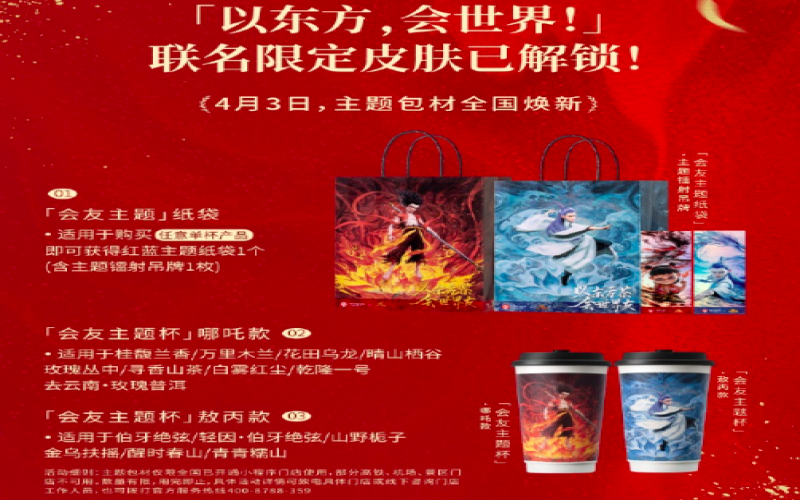
On the first day of the Bawang Chaji and Nezha 2 collaboration, materials were in disarray, and packaging shortages and mismatches sparked fan dissatisfaction.
The Chagee x "Ne Zha 2" collaboration officially launched today. Fans, who had been eagerly awaiting it, rushed to place orders for the limited-edition merchandise. However, on the very first day of the campaign, problems such as material shortages, mismatched packaging, and inconsistent execution across stores came to light, triggering strong dissatisfaction among consumers. By contrast, the earlier Cotti Coffee x "Ne Zha 2" collaboration was praised as "textbook-level" for its timely after-sales service and genuine sincerity. Chagee's chaotic performance this time has left many fans openly disappointed, with some even joking that they "couldn't even copy the homework properly." This article reviews the specific problems and consumer feedback from the first day of the campaign, and looks back at Cotti's successful experience, offering a comprehensive perspective for coffee and tea beverage enthusiasts. [more…]